


Transitional & Post-Hospital Care · Ann Arbor

Transitional Care in Ann Arbor for the First Weeks Home

We manage the first weeks home from the hospital, following the discharge plan so a small setback never turns into a return trip.

Short-term installs · typical timeline
Free Quote

Free Transitional & Post-Hospital Care quote.

We reply within 1 business hour. No spam, ever.

Caregiver supporting senior on stairs recovery
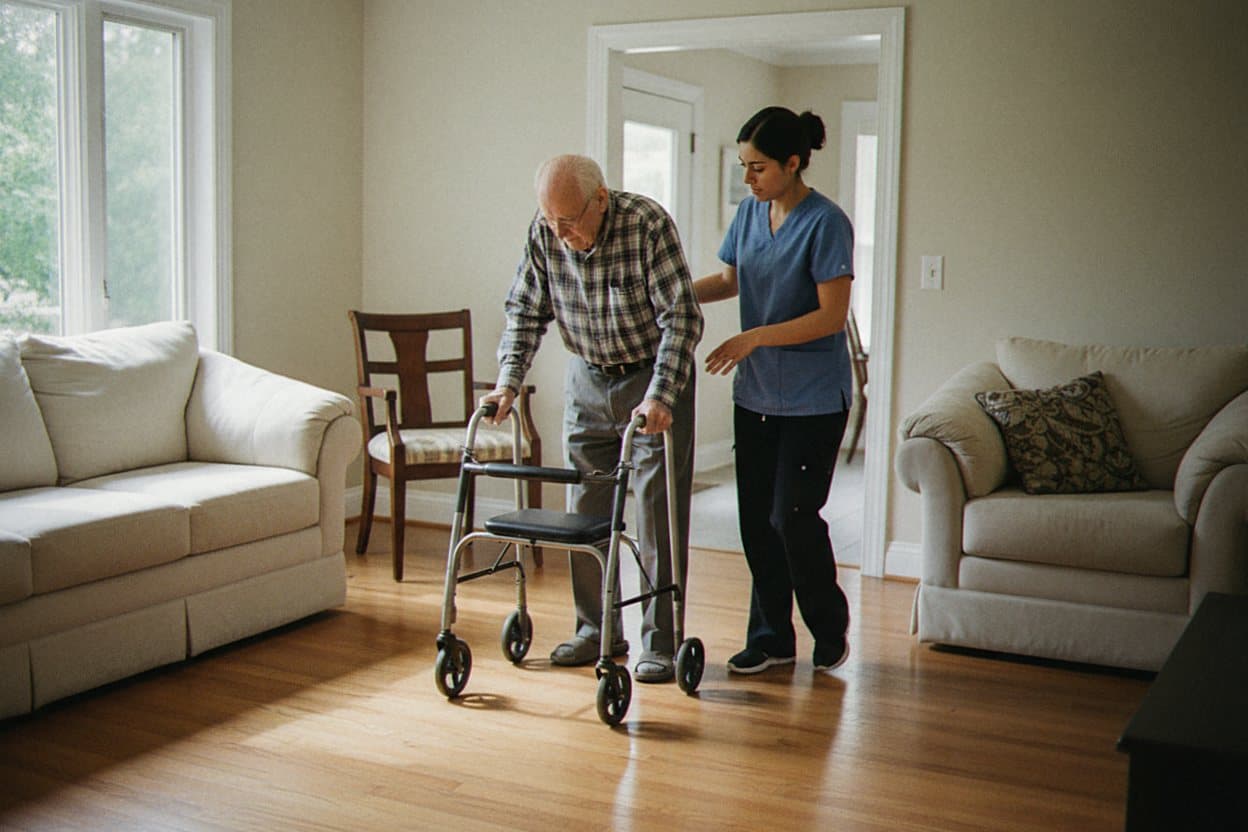
Senior practicing mobility with walker
Senior resting during post-hospital recovery
What we install

Steady help that keeps recovery on track at home

Transitional care in Ann Arbor is help for the shaky first weeks after a hospital stay. A person comes home weak, sore, and buried under a stack of discharge papers. There are new pills, follow up visits, and rules about what not to lift or do. That is the window when a small slip sends someone right back to the hospital. We step in to follow the discharge plan, watch for warning signs, and keep the recovery on track. When the daily tasks like bathing and dressing are the hard part, our personal care carries that load too.

Good transitional care starts the day your loved one leaves the hospital. We read the discharge plan, sort the new medicines, and build a simple daily schedule around rest and recovery. We make sure the follow up visits get on the calendar and that someone is there to drive. Our caregiver helps with safe steps to the bathroom, a warm meal, and the small chores that strain a healing body. We also watch closely, because a fever, a swollen leg, or a skipped meal can be the first sign of trouble. When we see it, we tell the family and the doctor right away.

  • We follow the hospital discharge plan step by step at home.
  • We sort the new medicines and remind your loved one when to take them.
  • We get follow up visits on the calendar and drive to each one.
  • We watch for warning signs and flag them to the family and doctor fast.
  • We help with safe steps, meals, and rest while the body heals.
The first weeks home decide a recovery, and steady transitional care keeps a small setback from becoming a return trip.

We are local to Ann Arbor, so a caregiver can reach your door fast when the hospital sends someone home. We know the area hospitals and the long winters that make a fresh recovery harder. An icy walk is the last thing a weak body needs. So we handle the steps and the errands while the cold lingers. Good transitional care leans on the same caregiver through the whole recovery, because trust speeds healing. Our coordinators stay reachable around the clock, so when something changes you reach a real person, any hour.

Tell us when your loved one is coming home, and we will have a plan ready before they walk in the door. Call us for a free, no pressure talk, and we will walk you through the first step.

Materials

The setup that makes recovery at home safe

Transitional care leans most on a caregiver who follows the discharge plan closely. But a few things in the home make a recovery far safer. A pill organizer sorted by day keeps the new medicines straight. That is where most people slip up the first week. A clear written copy of the discharge orders keeps every caregiver on the same page. We sort this out on the first visit. Then nothing important lives only in a tired patient's memory.

Beyond the paperwork, a few plain items keep a healing body safe during transitional care. A walker or a cane within reach cuts the risk of a fall on the way to the bathroom. Grab bars and a shower chair make washing safe while strength is still low. A raised seat and a clear, bright path let an unsteady person move without fear. None of this is fancy, and most of it is easy to set up before discharge day.

  • A pill organizer sorted by day for the new medicines
  • A written copy of the discharge orders everyone follows
  • A walker or cane and a clear path to the bathroom
  • Grab bars and a shower chair for safe washing
What about the alternatives?

Transitional care at home versus the other options

When a loved one comes home from the hospital, families weigh a few paths. We have sat at many Ann Arbor kitchen tables while folks talk it through. Here is an honest look at how transitional care at home compares to the common choices.

Transitional care at home

A caregiver follows the discharge plan in the home your loved one knows, which is the calmest place to heal and the easiest to keep safe.

Recommended

A short rehab facility stay

Therapy is right down the hall, but it means another move, a strange room, and a higher chance of picking up a new infection.

Acceptable

Leaning on family alone

Loving and free, but the medicines, the rides, and the warning signs are a lot to track while you also work and sleep.

Acceptable

Heading home with no help

Hoping it all goes fine, which is the gamble that ends with a missed pill, a fall, or a trip right back to the hospital.

Skip
How it goes

From quote to walk-on, fast.

01

Your inquiry

Call or send the short form with what is going on at your place. A sentence or two is plenty for the first step.

02

We talk it through

We go over the situation on the phone, ask the questions that matter, and tell you what we would do next.

03

A clear plan

You get a plain-language rundown of the work, the order it happens in, and what to expect on the day.

04

The work gets done

Our crew shows up when we said, does the job, and walks you through the result before leaving.

Before you book

Is transitional care worth it for a short recovery?

Most families think they can manage the first weeks alone, then find out how hard it is. These are the worries we hear most, answered straight.

It is only a few weeks. Do we really need help?
Those few weeks are exactly when most setbacks happen. A missed pill, a skipped follow up, or a fall in the first month is what sends people back to the hospital. Transitional care covers that risky window, then steps away once your loved one is steady. You pay only for the time the recovery actually needs.
Will you replace the home health nurse the hospital set up?
No, we work right alongside them. A home health nurse or therapist handles the medical side, like wounds and exercises, on their visits. Our transitional care covers all the hours in between, helping with meals, medicines, rides, and safe movement. The two fit together, and we keep notes so everyone stays on the same page.
What if the recovery takes longer than we thought?
That happens often, and the transitional care plan bends to it. If your loved one needs more time, we keep the same caregiver and adjust the hours. If they bounce back fast, we step down just as easily. You are never locked into more care than the moment calls for.
Aftercare

Adjusting care as the recovery moves along

Transitional care is never set and forget, because recovery rarely runs in a straight line. A person who needs help several hours a day in week one may need only a short morning visit by week three. A good plan moves with it. We check in often, update the written plan, and keep the same caregiver on the case, so nobody has to retell the whole story. Our job is to catch the small shifts, a new swelling or a harder time on the stairs, before they grow into a return trip to the hospital. That watchful care is what gets your loved one all the way back to steady.

  • We review the plan often and adjust the hours as strength returns.
  • The same caregiver stays on, so changes get noticed early.
  • We watch for warning signs, from new swelling to a skipped meal.
  • A coordinator stays reachable around the clock for the whole family.
  • Care can wind down as you heal or grow into longer term support.
Caregiver supporting senior on stairs recovery
FAQ

Transitional care questions Ann Arbor families ask

What is the difference between personal care and companion care?
Personal care is hands on help with the body, like bathing, dressing, and moving safely around the house. Companion care is about company and daily living, so meals, errands, rides to a clinic, and a friendly face through the day. Many families start with one and add the other as needs grow. We blend both under a single plan so the help fits the person.
How quickly can you start in home care for a family member in Ann Arbor?
In most cases we can begin within a few days, and sometimes the next day when the need is urgent. We start with a short visit to learn the routine and write a simple plan. Then we match a caregiver and set the schedule around your week. If a parent is coming home from the hospital, tell us the date and we will be ready.
Does in home care work alongside hospice or home health nursing?
Yes. We work in step with hospice teams and visiting nurses, and we handle the daily hours they do not cover. Nurses manage the medical side while our caregivers manage the hours in between, like meals, bathing, company, and safety at home. We share notes so everyone stays on the same page.
Can you provide care after a hospital discharge when my parent comes home?
Yes. Those first weeks at home are when a fall or a missed dose does the most harm, so we step in fast. A caregiver can help with bathing, meals, reminders to take medicine, and getting to follow up visits. We cover a few hours, full days, or overnight while your parent regains strength, then trim the hours as they improve.
How do you match a caregiver to my loved one?
We match on the person, not just a task list. Before anyone starts, we sit down in your living room to learn the daily routine, the likes, and the small things that matter most. Then we pick a caregiver whose pace and personality fit your loved one. If the first match feels off, we change it with no fuss.
Ready when you are

Let's make your next steps easier

Tell us what is going on at your Ann Arbor home and we will walk you through the options. One call or one short form is all it takes.

Call (734) 821-5601Make your inquiry
CallContact us